Can You Have A Heart Attack With No Symptoms?
Can You Have a Heart Attack With No Symptoms? What Coronary Thrombosis Studies Reveal
Table of Contents
Imagine a 58-year-old man who shrugs off a night of strange indigestion and a heavy feeling in his left arm. He goes to work the next morning. Two years later, a routine ECG shows a patch of scarred heart muscle, and his cardiologist tells him he has already had a heart attack.
He felt almost nothing. A clot still blocked his artery, and part of his heart muscle still died.
Stories like his are not rare. Studies that followed thousands of adults found that a large share of heart attacks pass without the person knowing. This post explains how a clot in a coronary artery can form without any warning, how frequently that happens, who is at highest risk, which faint signs deserve a check, and how doctors find the damage afterward.
Short answer. Yes. A clot in a coronary artery can form, and can even damage heart muscle, with no symptoms at all. In large studies, roughly a quarter to more than half of heart attacks went unnoticed when they happened. Doctors found them later on a cardiac MRI that showed scar tissue. The long-term risk of death, heart failure, and stroke was similar to the risk after heart attacks people did feel.
What Is Coronary Thrombosis, and What Does a Heart Attack With No Symptoms Mean?
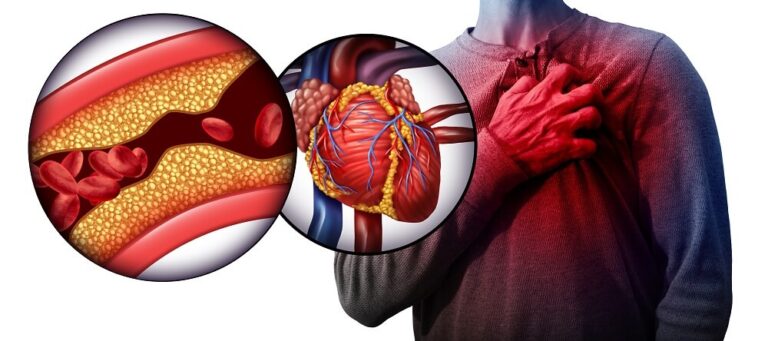
Coronary thrombosis is a blood clot that forms inside one of the arteries feeding your heart muscle. The clot is the cause. The heart attack, which doctors call a myocardial infarction, is the muscle damage that follows when that clot cuts off blood flow.
A painless heart attack is one that goes unnoticed when it happens. You feel nothing at all, and sometimes you feel something so mild and so unusual that neither you nor your doctor links it to the heart. It usually comes to light later, when an ECG, an imaging scan, and sometimes an autopsy show lost heart muscle.
How Common Are Heart Attacks That Cause No Symptoms?
More common than most people expect. The exact figure depends on who was studied and how the damage was found.
- The Framingham Heart Study followed thousands of adults. Among 708 heart attacks, more than 25% were found only because a routine ECG picked up new damage. About half of those caused no symptoms at all, and the rest caused unusual symptoms that nobody linked to the heart. The share of missed heart attacks was higher in women and older men.
- The Rotterdam Study tracked 5,148 adults aged 55 and older. A third of heart attacks in men (33%) and more than half in women (54%) went unnoticed at the time.
- Cardiac MRI finds more because it can pick up tiny scars that an ECG misses. In a Swedish study of 235 patients with suspected stable coronary disease, 25% had a scar from a heart attack they never knew about. A larger stress MRI study found a hidden scar in 14.8% of patients, almost the same as the 15.2% who had a known heart attack.
The numbers vary because the studies looked at different people with different tools. Put together, they show that in some groups somewhere between a quarter and well over half of heart attacks happen without anyone noticing.
Why Can a Coronary Clot Form With No Pain?
No single reason explains it. Several things can happen alone, and sometimes together.
1. The blockage is partial, and sometimes brief. If a clot narrows an artery without closing it, your heart muscle still gets some blood. If it closes the artery for only a short spell, the muscle may not struggle long enough to trigger pain.
2. A plaque can crack and heal quietly. Burke and colleagues studied the hearts of people who died suddenly with severe coronary disease. Healed plaque ruptures turned up in 61% of the series and were more frequent in arteries with tighter narrowing. Their conclusion was that small, unnoticed ruptures help plaques grow. One caution, these were people who died, so the study shows how plaques behave and does not prove that each person never felt a symptom.
3. Some clots start without a crack. In an autopsy study of sudden deaths caused by coronary thrombosis, 44% of cases came from plaque erosion, where the plaque surface wears away without bursting. Those patients were younger on average (44 versus 53 years), half of them were women, and their arteries were slightly less narrowed (70% versus 78%).
4. Damaged nerves mute the alarm. Heart pain travels along nerves. Diabetes can injure the nerves that regulate the heart, a condition called cardiac autonomic neuropathy, and researchers think this can dull pain during a heart attack. The evidence is in the next section.
5. The symptoms look like something else. In Framingham, many missed heart attacks were not painless. They caused unusual symptoms that nobody linked to the heart at the time.
Who Is Most at Risk of a Heart Attack With No Warning?
People with diabetes. In the ACCORD trial analysis of 4,842 adults with type 2 diabetes who started free of heart disease, those with cardiac autonomic neuropathy had about 1.9 times the risk of a painless heart attack. A smaller study of 60 diabetic patients found painless ischemia, meaning poor blood flow to the heart muscle, in 36% of those with autonomic dysfunction versus 5% of those without. That second study is small, so treat it as a clue and not as proof.
Women and older adults. Framingham and Rotterdam both found a bigger share of missed heart attacks in women. Framingham found the same in older men.
People with other coronary risk factors. High blood pressure, high cholesterol, smoking, and chronic kidney disease increase the chance of any coronary event, including one that nobody notices.
Faint Signs Worth Acting On
A heart attack with no pain can still leave a few clues. They are easy to explain away.
- Tiredness you cannot explain, and less stamina than usual
- Mild shortness of breath during tasks you handled easily before
- Indigestion-like discomfort, nausea, and cold sweats
- Aching in the jaw, neck, back, and arms
- Lightheadedness
A simple rule helps. If a symptom is new, has no clear cause, and looks different from your normal, ask for an ECG. That matters most when you have diabetes and other risk factors.
Are Heart Attacks With No Symptoms Less Dangerous?
No. The studies point the other way.
- In Framingham, these heart attacks were just as likely to lead to death, heart failure, and stroke as the ones people felt.
- In the Rotterdam Study, a missed heart attack meant higher death rates from all causes and from heart disease. Men had about 2.2 times the risk of dying from cardiovascular disease, and women about 1.4 times.
- A missed heart attack came with a 76% higher risk of stroke. In men the risk was about 2.5 times higher, while in women the link was not statistically clear.
- In men, it also meant twice the risk of developing atrial fibrillation. No such link showed up in women.
- A JACC Imaging study of 392 patients having what looked like a first heart attack used MRI and found an old, hidden scar in 8.2% of them. Their risk of dying was about 3.9 times higher, and their risk of a major cardiac event was about 3.1 times higher than in patients without a hidden scar.
How Doctors Find a Heart Attack That Left No Warning
Because nothing sounds an alarm at the time, doctors usually find the damage through testing.
- ECG. It can show pathological Q waves, a pattern left behind by lost heart muscle.
- Echocardiogram. This ultrasound can show a stretch of heart wall that moves poorly.
- Cardiac MRI. A contrast dye makes scar tissue light up, a technique called late gadolinium enhancement. It is the most sensitive of these tests and picks up small scars that the others miss, as the stress MRI study showed.
- Troponin blood test. It rises only while heart muscle is being injured, so it catches a painless heart attack only when drawn within days.
- Coronary calcium score and CT angiography. These measure plaque in the arteries rather than damage from the past.
What You Can Do If You Are at Risk
- Ask about testing. If you have diabetes, long-standing high blood pressure, a strong family history, and several risk factors together, ask whether an ECG and a stress test make sense. Routine screening is usually not advised for low-risk adults with no symptoms, so the decision is personal.
- Bring your numbers into range. Work with your doctor to bring LDL cholesterol, blood pressure, and blood sugar down to target levels, and quit smoking.
- Know what follows a finding. When an old infarct turns up, doctors commonly treat it like any earlier heart attack, with medicines such as aspirin, a statin, and blood pressure treatment. Your plan depends on your heart’s pumping strength and your medical history.
When to Call Emergency Services
Call emergency services right away for sudden chest pressure, shortness of breath, a cold sweat, and pain that spreads to the jaw and arm. Any one of these deserves action. Do not wait to see whether it passes, especially when you have risk factors.
Frequently Asked Questions
Can you have a heart attack and not know it? Yes. In the Rotterdam Study, about a third of heart attacks in men and more than half in women went unnoticed at the time.
Can a blood clot in the heart cause no pain? Yes. A partial clot, a brief clot, a quiet plaque rupture, plaque erosion, and nerve damage from diabetes can all mean little pain, and sometimes none.
How is a heart attack with no symptoms found? An ECG, an echocardiogram, and a cardiac MRI can show old scar tissue, and the finding frequently comes up during an unrelated checkup.
Are heart attacks with no symptoms as serious as the painful kind? The evidence says they can be. Framingham found similar rates of death, heart failure, and stroke after missed and noticed heart attacks.
Does diabetes hide heart attack symptoms? It can. Nerve damage from diabetes was tied to a higher chance of a painless heart attack in the ACCORD analysis.
The Bottom Line
A clot in a heart artery can form without giving you any warning. Heart attacks that arrive with no warning make up a large share of all heart attacks. In the studies above, they raised the risk of death, heart failure, stroke, and atrial fibrillation. If you have diabetes, other risk factors, and notice tiredness and breathlessness you cannot explain, take that to your doctor and ask about your personal risk.
Sources
- Framingham Study report on missed heart attacks, New England Journal of Medicine, 1984
- Rotterdam Study on how many heart attacks go unnoticed, European Heart Journal, 2006
- Rotterdam Study on survival after a missed heart attack, by sex
- Rotterdam Study on stroke risk after a missed heart attack, Neurology, 2006
- Rotterdam Study on atrial fibrillation after a missed heart attack
- Swedish cardiac MRI study on hidden scars and long-term outlook, PLoS ONE, 2018
- Study of earlier hidden heart attacks in patients having a first heart attack, JACC Cardiovascular Imaging
- Stress cardiac MRI study of hidden scarring, Journal of the American College of Cardiology, 2020
- Editorial on ruptured and healed plaques, EuroIntervention
- Farb and colleagues on plaque erosion without rupture, Circulation, 1996
- ACCORD analysis of cardiac autonomic neuropathy and painless heart attack, Journal of the American Heart Association, 2023
- Study of type 2 diabetes, cardiac autonomic dysfunction, and painless ischemia, Turkiye Klinikleri Journal of Cardiology
- Study of unnoticed infarction and scar detection, Nordenskjold and colleagues