10 Early Signs of Heart Failure in Women
10 Early Signs of Heart Failure in Women (And Why They’re Easy to Miss)
Table of Contents
Heart failure affects more than 6 million Americans, and nearly half of them are women. Yet women are consistently diagnosed later than men after the condition has already caused serious damage.
A 2021 study in the Journal of the American College of Cardiology found that women waited an average of 4.5 years longer than men to receive a heart failure diagnosis, despite showing up to their doctors with worse symptoms. That delay isn’t because women avoid medical care. It’s because their symptoms don’t match the classic picture most doctors are trained to recognize and because complaints like breathlessness and fatigue in women are too often blamed on stress, aging, or anxiety.
Knowing the specific signs of heart failure in women can save lives. Here’s what to watch for.
Why Heart Failure Looks Different in Women
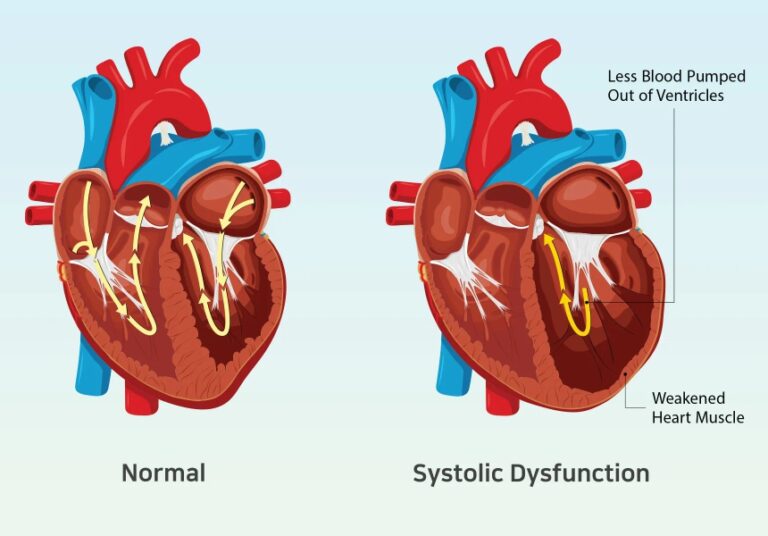
Heart failure doesn’t mean the heart has stopped. It means the heart can no longer pump enough blood to meet the body’s needs.
In men, this usually happens because the heart muscle becomes weak and can’t squeeze properly. In women, it more commonly happens because the heart muscle becomes stiff and can’t relax and fill properly between beats. This is called heart failure with preserved ejection fraction, and women make up roughly 65–70% of all HFpEF cases, according to data from the Framingham Heart Study.
The problem with HFpEF is that it doesn’t always show up on standard heart tests. A basic echocardiogram can come back looking normal even when the heart isn’t functioning properly. This is one of the main reasons women go undiagnosed for years.
After menopause, estrogen levels drop, which accelerates stiffening of the heart muscle and blood vessels. High blood pressure which becomes more common in women after menopause makes this worse. Autoimmune conditions like lupus and rheumatoid arthritis, which affect women far more than men, also increase the risk.
The 10 Early Signs of Heart Failure in Women
- Shortness of breath during everyday activities
- Extreme fatigue that rest doesn’t fix
- Swelling in the legs, ankles, and feet
- Waking up unable to breathe at night
- Rapid heartbeat
- A cough or wheezing that won’t go away
- Sudden weight gain from fluid buildup
- Nausea, bloating, and loss of appetite
- Trouble concentrating
- Unexplained anxiety
1. Shortness of Breath During Everyday Activities
What it feels like: Climbing stairs, carrying groceries, leaves you more breathless than it should. It’s not dramatic — it builds slowly over weeks, so most women assume they’re just getting older.
The key warning sign is that it’s new, it’s getting worse, and it’s out of proportion to the effort involved.
Why it happens: When the heart doesn’t pump properly, blood backs up into the veins leading to the lungs. Fluid leaks into the lung tissue, making the lungs stiffer and harder to fill. Breathing becomes more work, even with light activity.
Why it matters for women: A 2020 study in JACC: Heart Failure found that over 70% of women later diagnosed with HFpEF first came to their doctor complaining of breathlessness during activity. On average, those women had been experiencing the symptom for 14 months before anyone investigated a cardiac cause. Most had been told they were anxious.
2. Extreme Fatigue That Rest Doesn’t Fix
What it feels like: This isn’t regular tiredness. Women describe it as a heaviness in the body. Even simple tasks like cooking a meal can feel like running a marathon. The effort-to-recovery ratio is completely off: five minutes of activity can require an hour to recover from.
Why it happens: The heart isn’t delivering enough oxygen-rich blood to the muscles. Muscles starved of oxygen fatigue quickly. On top of that, the body releases stress hormones to compensate for the struggling heart, and those hormones cause additional muscle wasting and exhaustion over time.
Why it matters for women: A study in Heart & Lung found that women with heart failure rated fatigue as more disruptive to daily life than any other symptom. Yet it was the symptom doctors were least likely to link to the heart. In women over 50, fatigue is almost always investigated as a thyroid problem, anemia, depression, or menopause before anyone considers a cardiac cause.
3. Swelling in the Legs, Ankles, and Feet
What it feels like: Shoes that fit fine in the morning are tight by the afternoon. Socks leave deep marks around the ankle. If you press a finger into the swollen area and hold it for five seconds, it leaves a dent that takes several seconds to fill back in. This is called pitting edema and it’s a sign of fluid buildup from heart failure.
The swelling is usually in both legs equally, worst at the end of the day, and better in the morning after lying flat overnight.
Why it happens: When the right side of the heart struggles, blood backs up in the body’s veins. High pressure in those veins pushes fluid out into the surrounding tissue, particularly in the legs and feet where gravity pulls it down. The kidneys also retain extra salt and water as a compensatory response, adding more fluid to an already overloaded system.
Why it matters for women: Women are more likely to attribute leg swelling to varicose veins, standing all day, or hormonal changes — all of which are also valid causes of swelling. The difference with cardiac edema is that it affects both legs equally, progressively worsens over days and weeks, and comes alongside other symptoms like breathlessness and fatigue.
4. Waking Up Unable to Breathe at Night
What it feels like: You fall asleep normally but wake up 1–3 hours later in a panic, gasping for air. The sensation is alarming — many women describe feeling like they’re suffocating. Sitting upright brings relief within about 10 minutes.
A related symptom is needing more and more pillows to breathe comfortably while sleeping. If you’ve gone from sleeping flat to needing three pillows over recent months, that progression matters clinically.
Why it happens: When you lie flat, fluid that collected in your legs during the day shifts into your chest. A healthy heart handles this easily. A failing heart can’t clear the extra fluid fast enough, so it backs up into the lungs — causing the sudden, frightening breathlessness that jolts you awake.
Why it matters for women: A 2018 study in the European Journal of Heart Failure found this symptom was present in 58% of women newly diagnosed with heart failure. Despite that, fewer than half had ever mentioned it to their doctor. Most had blamed acid reflux, anxiety, or simply “not sleeping well” — and their doctors, when told, had often agreed with those explanations rather than investigating further.
5. Rapid Heartbeat
What it feels like: A racing sensation in the chest, even at rest. A skipping feeling, as if the heart is beating out of order. Some women feel a pounding pulse in their neck. Episodes can go on for hours, and may come with a brief sense of faintness.
Why it happens: When the heart isn’t pumping enough blood with each beat, it compensates by beating faster. Over time, the structural changes that come with heart failure stretch and scar the upper chambers of the heart, creating the conditions for atrial fibrillation (AFib).
Why it matters for women: Women with heart failure develop AFib at higher rates than men, and it hits them harder. A large analysis published in JACC found that women with both heart failure and AFib had a 17% higher risk of death and a 23% higher stroke risk than men with the same combination. Despite this, women with AFib are less likely to be offered rhythm-restoring treatments.
6. A Cough That Won’t Go Away
What it feels like: A dry, persistent cough that has been present for weeks without improvement. It’s worse when lying down and slightly better when sitting upright. Some women produce small amounts of white or faintly pink-tinged mucus. In some cases, there’s an audible wheeze — enough that it’s sometimes mistaken for asthma.
Why it happens: Fluid building up in the lungs triggers a constant cough reflex. The lung tissue becomes congested, and the airway narrows from surrounding fluid pressure. The cough is the body’s attempt to clear fluid it can’t actually clear — it won’t stop until the fluid overload is treated.
Why it matters for women: This symptom leads women down the wrong diagnostic path more often than almost any other on this list. A 2021 review in Clinical Cardiology found that women presenting with a cardiac cough were seen by a pulmonologist before a cardiologist in 44% of cases — adding an average of over six months to the time it took to reach a heart failure diagnosis. It was most frequently linked to allergies, post-nasal drip, or a side effect of blood pressure medication.
7. Sudden Weight Gain From Fluid Buildup
What it feels like: The scale jumps 2–3 pounds overnight, with no change in eating. Clothes feel tighter around the abdomen. Rings become harder to remove. The face may look puffy in the morning.
This isn’t fat gain — it’s water. The body is holding onto fluid it can’t process properly.
Why it happens: Reduced blood flow to the kidneys triggers a hormonal response that causes the kidneys to retain sodium and water. Each gram of retained sodium pulls roughly 200ml of water along with it. Fluid accumulates throughout the body — in the legs, abdomen, and chest — building up quietly for weeks before more obvious symptoms appear.
Why it matters for women: Daily weight monitoring is one of the most powerful early warning tools available. Research cited in AHA guidelines shows that patients who weigh themselves every morning and report sudden gains to their care team reduce their risk of heart failure hospitalization by up to 30%, according to a major trial published in New England Journal of Medicine . A consistent log of daily weights is among the most useful information you can bring to a doctor’s appointment.
8. Nausea, Bloating, and Loss of Appetite
What it feels like: A persistent, low-grade queasiness that makes food unappealing. Feeling uncomfortably full after just a few bites. Bloating in the upper abdomen, especially on the right side. Some women also notice a dull ache under their right ribcage.
Why it happens: When the right side of the heart struggles, blood backs up into the veins supplying the liver and digestive tract. The liver swells against its outer casing, causing discomfort. Congestion in the gut wall slows digestion and makes eating uncomfortable.
Why it matters for women: Digestive symptoms as a first sign of heart trouble are reported more in women than men. A 2022 review in Clinical Cardiology found that women presenting with heart failure and prominent GI symptoms were 2.3 times more likely than men to get a digestive workup before a cardiac one — delaying a heart failure diagnosis by an average of 11 weeks.
9. Trouble Concentrating
What it feels like: Forgetting words mid-sentence. Losing track of conversations. Struggling to follow a recipe that were never a problem before. A general mental slowness that feels different from normal forgetfulness. Women describe it as feeling “foggy”.
Why it happens: The brain needs a constant, large supply of oxygenated blood. When cardiac output drops, the brain gets less of it. Reduced blood flow to the brain impairs memory, attention, and processing speed. Chronic under-perfusion over months causes measurable changes in brain function.
Why it matters for women: A 2023 study in Circulation: Heart Failure found cognitive impairment in 43% of women newly diagnosed with heart failure, compared to 27% of men. Women’s cognition also declined faster over the following two years. Despite this, cognitive symptoms were only recorded in the clinical notes for 19% of the women who tested positive — meaning most women had their mental changes linked to aging, not their heart.
10. Unexplained Anxiety
What it feels like: Not a panic attack. Not worry about a specific problem. Just a persistent, background sense of unease — a physical feeling that something in the body isn’t right. It’s often worse at night. Some women describe a restlessness, an inability to get comfortable, or a low-level dread they can’t explain.
Why it happens: The body’s stress response activates when the heart is struggling. Elevated stress hormones produce a state of physical arousal — racing heart, heightened alertness, and a vague but real sense of threat. The brain detects that something is wrong even when the conscious mind can’t identify it.
Why it matters for women: A study in the American Heart Journal found that 67% of women diagnosed with heart failure had reported nonspecific anxiety or physical unease to a doctor in the 12 months before their diagnosis. In 81% of those cases, it was linked to anxiety disorder, menopause, or stress with no cardiac follow-up. Women who reported this feeling alongside more physical symptoms from this list received a confirmed cardiac diagnosis within 60 days in 74% of cases when properly investigated.
When to See a Doctor
If you’re experiencing several of these symptoms together especially breathlessness, swelling, breathing difficulty at night, and fatigue that doesn’t improve with rest, make an appointment with your doctor and ask specifically for a BNP test. This simple test measures a hormone the heart releases under stress and is abnormal in most active heart failure cases. Bring a written log of your symptoms, including when they started and how they’ve changed. Daily weight measurements are especially useful data to have.
Go to the emergency room immediately if you experience:
- Sudden severe breathlessness at rest
- Chest pain
- Near-fainting with a racing heart
- Coughing up frothy mucus
How Heart Failure Is Diagnosed in Women
Standard tests include the BNP test, a resting echocardiogram, and if those come back normal but symptoms persist, an exercise stress echocardiogram. This last test is critical for women because it can reveal the kind of heart failure most common in women — HFpEF — that is invisible at rest. A normal result on a resting echo does not rule out heart failure in a woman with active symptoms.
If your tests have come back normal but something still feels wrong, ask your doctor specifically about diastolic function testing and whether an exercise echo is appropriate. A normal ejection fraction does not mean a healthy heart when the symptoms say otherwise.
Frequently Asked Questions
Can you have heart failure without chest pain?
Yes — and in women, this is the norm. Most women with heart failure never experience chest pain. Breathlessness, fatigue, and swelling are far more common first symptoms.
What does heart failure fatigue feel like compared to regular tiredness?
Normal fatigue gets better with rest. Heart failure fatigue doesn’t. It’s present when you wake up, worsens with even light activity, and takes far too long to recover from. It feels less like sleepiness and more like physical heaviness.
Is heart failure more dangerous in women?
Women survive the first year at slightly higher rates than men, but experience worse quality of life, more hospitalizations, and faster cognitive decline. Long-term outcomes are significantly affected by how late the diagnosis comes.
What age does heart failure typically start in women?
Most women are diagnosed in their late 60s to mid-70s, about 4–5 years later than men. But women with high blood pressure, diabetes, autoimmune disease, or a history of preeclampsia during pregnancy face elevated risk earlier — sometimes in their 40s and 50s.
Heart failure in women is real, it’s common, and it’s frequently missed. Every symptom on this list has a clear biological explanation and a documented pattern of being overlooked in women. The earlier it’s caught, the better the outcome.
If something in your body has felt persistently off especially a combination of the symptoms above, push for answers. You know your body. Trust it.