Heart Attack Symptoms in Women: Why Coronary Thrombosis Looks Different
Heart Attack Symptoms in Women Explained, Why Your Chest May Never Hurt at All
Table of Contents
A 43 year old woman feels wiped out for three days straight. Her jaw aches a little. She feels sick to her stomach and blames it on stress. There is no crushing chest pain, no dramatic collapse, nothing that looks like the heart attacks shown in movies. Yet her heart is in trouble right now.
This happens more often than most people realize. Nearly half of women having a heart attack show up at the hospital without chest pain, while less than a third of men do. That gap isn’t about women feeling less pain. It comes from a different kind of clot forming inside a different kind of artery, through a process that behaves nothing like the textbook heart attack most of us were taught to watch for.
Let’s break down what’s happening inside a woman’s heart during a heart attack, and why the warning signs show up in such an unexpected way.
What Coronary Thrombosis Actually Means
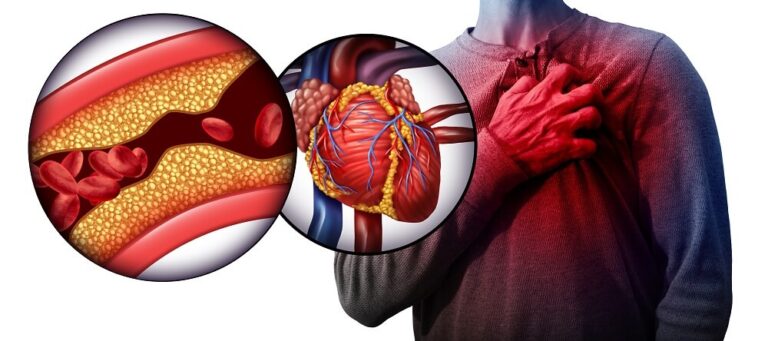
A coronary thrombosis is simply a blood clot that blocks a coronary artery, cutting off oxygen to a section of heart muscle. Most people learn a single version of how this happens. A fatty plaque sits inside the artery wall for years, then its outer cap suddenly cracks open. Blood rushes into that crack and forms a clot within minutes, blocking the artery fast and causing the sudden crushing pain most of us picture during a classic heart attack.
This process, called plaque rupture, is the dominant pattern in men. It’s also the pattern most doctors are trained to recognize first.
Women’s hearts frequently follow a completely different script, and that script produces a completely different set of warning signs.
Why Women’s Coronary Arteries Behave Differently
Women typically have narrower coronary arteries than men, and their artery disease tends to spread out evenly along the vessel instead of piling up into one obvious blockage. Research published in Circulation: Cardiovascular Imaging found that because women’s arteries run smaller to begin with, they can develop symptoms from a much smaller clot than a man’s body would need to feel anything at all.
Think of it like a garden hose. A pebble lodged in a wide hose barely slows the water. That same pebble inside a thin drinking straw stops the flow almost completely. A small clot that a man’s wider artery could handle without much trouble can seriously choke off blood flow in a woman’s artery, without producing the sudden dramatic pain that a complete blockage in a larger artery would cause.
Plaque Erosion, The Clot Most People Have Never Heard Of
Here’s where the story gets genuinely interesting. Plaque erosion is a different way a clot can form inside an artery. Instead of a plaque cap cracking open, a small patch of the artery’s inner lining wears away while the plaque itself stays fully intact. A clot builds slowly on top of that worn away patch.
Autopsy studies looking at sudden coronary deaths found plaque erosion in about seventy five percent of women younger than 50, compared with as low as thirty five percent in men the same age, according to research published via the NIH. Among women under 50, erosion may be behind more than eighty percent of coronary clots.
Why does this matter so much for symptoms? Clots that form through erosion tend to be smaller and less complete than clots from a ruptured plaque. Instead of slamming the artery shut in seconds, they often block it partially, sometimes on and off, over hours instead of instantly. That slower, patchier blockage produces a slower, patchier set of symptoms. Fatigue that builds for days. Mild discomfort that comes and goes. Nausea that feels like a stomach bug. None of it screams heart attack the way sudden crushing pain would, yet the danger is just as real.
Age and hormones shape which pattern shows up. A study in the American Journal of Cardiology found that women who died suddenly from heart disease before menopause almost never showed plaque rupture. Erosion was the clot behind almost every case. Women past menopause showed the opposite pattern, with plaque rupture becoming far more common, much closer to what typically happens in men.
MINOCA, When The Heart Attack Is Real But The Artery Looks Fine
Picture getting an angiogram after a heart attack and being told your arteries look clean. For a lot of women, that’s exactly what happens, and it’s one of the most frustrating parts of this whole picture.
MINOCA stands for myocardial infarction with nonobstructive coronary arteries. In plain terms, it means the blood tests and heart tracings confirm a genuine heart attack happened, while the major arteries on the angiogram don’t show the kind of blockage doctors expect to see. It shows up in roughly five to fifteen percent of all heart attacks, and women make up close to half of those cases despite being a much smaller share of heart attacks overall, according to an American Heart Association statement.
One study focused on younger patients found something striking. Women having a heart attack were five times more likely than men to end up with a MINOCA diagnosis. One in eight women in that study who had a heart attack fell into this category.
A huge piece of the puzzle here is the heart’s tiniest blood vessels, the ones far too small to show up clearly on a standard angiogram. When these microscopic vessels fail to open properly, blood flow to the heart muscle drops sharply even while the big arteries look perfectly clear. Doctors call this coronary microvascular dysfunction, and it’s a leading explanation for why so many MINOCA cases happen in women.
The problem is what happens next. A clean looking angiogram gets treated as proof nothing is wrong, when it should be treated as a signal to dig deeper with tools like cardiac MRI and optical coherence tomography.
SCAD, The Tear Nobody Expects In A Young Healthy Woman
Spontaneous coronary artery dissection, known as SCAD, is a tear that forms inside the wall of a coronary artery on its own, without any plaque buildup involved. Blood pools between the layers of the artery wall, forming a bubble of trapped blood that squeezes the artery from inside and chokes off blood flow.
Most people who get SCAD are women, and a lot of them are otherwise healthy. No smoking. No diabetes. No high cholesterol. Nothing that would make a doctor think twice about their heart.
According to an American Heart Association scientific statement, SCAD may be responsible for up to thirty five percent of heart attacks in women fifty and younger, and it’s the single most common cause of heart attacks tied to pregnancy. A large Canadian study following SCAD patients found the average age at diagnosis sat around fifty two, with 88.5 percent of patients being women, just over half already past menopause.
Because SCAD doesn’t leave behind the plaque buildup radiologists are trained to search for, and because the patient rarely fits the risk profile doctors expect, it gets dismissed as anxiety a shocking number of times before anyone takes a closer look.
What Estrogen Actually Does To Your Arteries
Estrogen calms inflammation inside blood vessels and appears to keep plaque from behaving as aggressively as it otherwise would. That’s a big part of why erosion, not rupture, dominates heart attacks in premenopausal women. Research on menopause and plaque found that estrogen’s calming effect doesn’t reach erosion the same way it reaches rupture, which explains why erosion keeps showing up even while estrogen is doing its protective work everywhere else.
This is one piece of a much bigger puzzle, not the whole answer. SCAD and microvascular problems don’t fit neatly into a simple hormone story, and scientists are still working out exactly why.
The List Of Heart Attack Symptoms In Women
Given everything above, it makes sense that women’s heart attack symptoms rarely match the dramatic chest clutching scene from television. Here’s what shows up far more often.
- Shortness of breath, sometimes with zero chest discomfort attached
- Pain and pressure in the jaw, neck, upper back, and the space between the shoulder blades
- Nausea, vomiting, and a heavy indigestion feeling that mimics a stomach issue
- Deep, unusual tiredness, sometimes building for days before anything else shows up
- Cold sweats, dizziness, and a sense that something is seriously wrong even without pain
A McGill University study of younger heart attack patients found that 1 in 5 women under 55 had zero chest pain, showing up instead with sudden weakness, short breath, and pain running down the left arm and shoulder. The size and seriousness of the heart attack itself was exactly the same in these women, chest pain and no chest pain.
Why A “Normal” Angiogram Doesn’t Mean You’re In The Clear
A normal angiogram sounds like reassuring news, but for plenty of women it isn’t the full story. Clots from erosion, microvascular trouble, and SCAD can all leave the major arteries looking wide open on a standard scan while a genuine heart attack unfolds anyway. This exact gap is why MINOCA exists as a diagnosis, and it’s a major driver behind missed and delayed diagnoses in women.
A Spanish study following more than 41,000 chest pain patients found the gap starts the moment a patient walks in. When an ECG didn’t give a clear answer, doctors suspected a heart related cause in 44.5 percent of men, compared with just 39 percent of women, using nothing but the same test results. The same study found 41 percent of women waited twelve hours and beyond before seeking any help, compared with 37 percent of men.
Getting The Right Tests Done
When symptoms are real but the angiogram looks clean, pushing for more testing genuinely matters. Coronary flow reserve testing checks how the heart’s tiniest vessels are working.
Optical coherence tomography can spot erosion and dissection that a plain angiogram misses completely.
A Circulation study combining OCT with cardiac MRI found an actual cause behind eighty five percent of MINOCA cases in women, far higher than either tool caught on its own.
If a test comes back clean but symptoms keep showing up, matching everything described above, that’s a reason to ask for more, not a reason to let it go.
When To Get Emergency Help Right Now
Any fresh combination of breathlessness, deep fatigue, and nausea deserves an emergency room visit right away, especially alongside a family history of heart disease, diabetes, high blood pressure, smoking, and being past menopause. Chest pain shows up frequently, but it’s far from guaranteed, and its absence doesn’t make anything less dangerous.
Sources
- Yahagi K, et al. Sex differences in coronary artery disease, pathological observations. Atherosclerosis, ScienceDirect
- Kataoka Y, et al. Insights into coronary plaque microstructure differences between women and men. Circulation: Cardiovascular Imaging, AHA Journals
- White SJ, et al. Biomechanics and inflammation in atherosclerotic plaque erosion and rupture. PMC
- Sudden coronary death and menopause plaque morphology. American Journal of Cardiology, ScienceDirect
- Tamis-Holland JE, et al. Contemporary diagnosis and management of MINOCA, AHA scientific statement. Circulation, AHA Journals
- Reynolds HR, et al. OCT and CMR to determine causes of MINOCA in women. Circulation, AHA Journals
- Waterbury TM, et al. MINOCA in younger patients. JAHA, AHA Journals
- Hayes SN, et al. Spontaneous coronary artery dissection, current state of the science, AHA scientific statement. Circulation, AHA Journals
- Saw J, et al. Contemporary review of SCAD epidemiology and CanSCAD findings. PMC
- Pilote L, et al. Chest pain absence in young women’s heart attacks. RCI
- Martinez-Nadal G. Gender gap in chest pain evaluation. European Society of Cardiology, Eurekalert