Diastolic Heart Failure: What It Is, Symptoms, Causes & Treatment
Diastolic Heart Failure: Symptoms, Causes, Treatment, and Life Expectancy Explained
Table of Contents
Your echocardiogram test shows a normal result. Your doctor says your heart is pumping fine. But you cannot climb one flight of stairs without stopping. Your ankles swell by evening. You wake up at 3 a.m. struggling to breathe, propped on three pillows.
This is diastolic heart failure, also called heart failure with preserved ejection fraction (HFpEF). The pumping is fine. The problem is that your heart muscle has become too stiff to relax and refill with blood between beats. Because the pump reading looks normal, this condition gets missed — sometimes for years.
HFpEF is responsible for more than half of all heart failure cases in the U.S. It affects roughly 3.7 million Americans and is just as deadly as the more well-known type. In July 2025, the FDA approved a second medication specifically for HFpEF — the first new approval in years. This article explains what is happening in your heart, how doctors find it, and what treatments are available.
What Is Diastolic Heart Failure?
Your heart works in two steps with every beat.
Step 1 — Squeeze (systole): The left ventricle contracts and pushes blood out to the body.
Step 2 — Relax and refill (diastole): The heart muscle relaxes, the chamber expands, and blood flows back in from the lungs. This step is not automatic — it takes energy and needs a soft, flexible muscle.
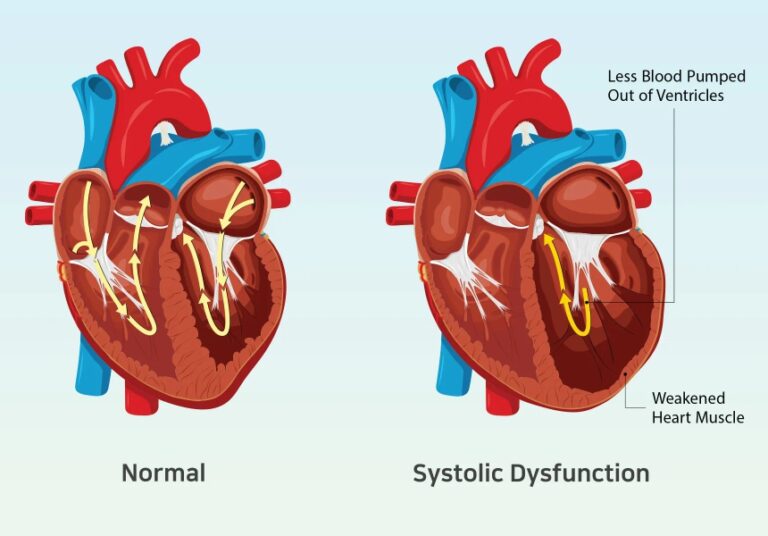
In diastolic heart failure, the heart muscle has become stiff, from scarring (fibrosis), thickening (hypertrophy), or both. The chamber cannot expand fully. Less blood flows in. Less blood flows out.
Even though the ejection fraction stays at 50% or above and looks normal on your report, the total amount of blood the heart moves each minute drops. To force blood into the stiff chamber at all, pressure inside the heart builds up. That pressure pushes back into the lungs, causing fluid to leak into lung tissue. That is why you feel short of breath even when your test results look fine.
Doctors diagnose HFpEF when: the ejection fraction is 50% or higher, AND there is evidence of high pressure inside the heart — either at rest or during exercise.
Same condition, two names: “Diastolic heart failure” and “HFpEF” refer to the same thing. Most doctors now use HFpEF because it is more specific.
HFpEF is more common in women, more common after age 65, and more common in people with obesity, high blood pressure, and diabetes. Each hospital stay for HFpEF more than doubles the chance of dying from a heart-related cause afterward — so staying out of the hospital is just as important as managing daily symptoms.
What Causes Diastolic Heart Failure?
According to the 2022 AHA/ACC/HFSA guidelines, HFpEF is not just a heart problem. It is a whole-body condition driven by long-term inflammation from conditions like high blood pressure, obesity, and diabetes — all of which slowly stiffen the heart from the outside in.
High blood pressure is the most common cause, found in 60–80% of HFpEF patients. Years of high pressure force the heart wall to thicken and fill with stiff scar tissue. The muscle still squeezes hard, so the pump reading stays normal but it can no longer relax between beats. Pressure inside the heart keeps rising.
Obesity harms the heart four ways at once: it increases blood volume, causes fat around the organs to release inflammation chemicals that stiffen heart tissue, physically squeezes the heart from surrounding fat, and blocks nitric oxide that helps the muscle relax. Obese HFpEF is its own type — these patients develop serious symptoms about ten years earlier and have worse heart damage overall. Losing 10–15% of body weight can partially reverse the damage — rare in any other HFpEF type. Warning: obesity makes the standard heart failure blood tests (BNP and NT-proBNP) look falsely normal, so a normal result in an obese patient does not rule out HFpEF.
Type 2 diabetes disrupts how heart cells produce energy, and causes sugar-related compounds called AGEs to stick to the heart’s connective tissue, making it progressively stiffer. About 45% of HFpEF patients have diabetes.
Atrial fibrillation (AFib) is an irregular heart rhythm where the upper chambers quiver instead of squeezing properly. This eliminates a final small squeeze — the “atrial kick” — that normally pushes the last 20–30% of blood into the ventricle. For a stiff heart that already struggles to fill, losing that extra push can cause sudden worsening. AFib is present in more than 50% of HFpEF patients.
Other contributing conditions include coronary artery disease, chronic kidney disease, obstructive sleep apnea, and iron deficiency (affects 30–50% of HFpEF patients and weakens both heart and skeletal muscle even when the person is not anemic).
Diastolic Dysfunction Stages: From Early Warning to Heart Failure
Not everyone with a stiff heart has heart failure yet. Doctors grade the stiffness on a scale of 1 to 3:
| Grade | What Is Happening | What It Means for You |
|---|---|---|
| Normal | Heart relaxes at a normal speed; pressure is normal | No problem |
| Grade 1 (Mild) | Relaxation is slower than normal; pressure is normal at rest but may rise during exercise | Early warning — “pre-heart failure” (Stage B) |
| Grade 2 (Moderate) | Slower relaxation plus high pressure even at rest | You likely have symptoms — this is HFpEF |
| Grade 3 (Severe) | Severely slow relaxation with very high pressure | Advanced HFpEF; high risk of hospital stays |
An important warning about testing: A 2026 study in JACC tested the latest grading standards on real HFpEF patients and found that among those labeled Grade 1 on a resting echo scan, more than 60% actually had dangerously high heart pressures when measured directly. The test missed elevated pressure 90.5% of the time in Grade 1 patients. This is why many cardiologists now use an exercise stress echo to catch the problem that the resting scan misses.
Grade 1 is your best window to act. The 2022 AHA/ACC guidelines call this Stage B — heart changes are present but you have no symptoms yet. Controlling blood pressure and losing weight at this stage can stop the slide into full heart failure.
Symptoms of Diastolic Heart Failure
HFpEF and the more common type of heart failure (HFrEF) cause exactly the same symptoms. Tests are the only way to tell them apart. Many patients spend months being told they are just unfit before the real cause is found.
Breathlessness during activity is usually the first sign at first only with hard effort like climbing stairs, then with everyday tasks, and eventually even at rest.
Breathlessness when lying flat (orthopnea): Lying down shifts fluid from your legs into your chest, increasing pressure in the lungs. Most patients end up sleeping on three pillows to stay comfortable.
Waking up gasping (paroxysmal nocturnal dyspnea): You wake suddenly 1–3 hours after falling asleep, short of breath. It is the same fluid shift as lying-flat breathlessness — it just builds slowly during sleep until it wakes you.
Swollen ankles and legs (edema): When the heart cannot pump efficiently, fluid backs up into the body and settles in the legs due to gravity. In serious cases it can also build up in the belly or around the lungs.
Poor exercise tolerance: Your heart rate rises with effort, but the stiff ventricle cannot pump more blood per beat, so muscles run out of oxygen quickly. Many patients notice a clear drop in what they could do compared to one or two years ago.
Tiredness and brain fog: Low blood flow over time causes persistent fatigue and, in advanced cases, trouble concentrating or remembering things — often mistaken for normal aging.
The Three Types of Heart Failure
| Feature | HFpEF | HFmrEF | HFrEF |
|---|---|---|---|
| Ejection fraction | 50% or higher | 40–49% | Below 40% |
| Main problem | Heart too stiff to fill | Partly stiff, partly weak | Heart too weak to pump |
| Who gets it most | Older women with high blood pressure or obesity | Often men recovering from a heart attack | Older men after a heart attack or with an enlarged heart |
| Approved medications | SGLT2 inhibitors, finerenone | SGLT2 inhibitors, finerenone; some HFrEF drugs | ACE inhibitors, ARNIs, beta-blockers, MRAs, SGLT2 inhibitors |
| Do standard HFrEF drugs work? | No — trials have not proven benefit | Partially | Yes |
ejection fraction 40–49% sits between the other two and until recently had almost no proven treatments. The 2025 FDA approvals of both SGLT2 inhibitors and finerenone now cover HFmrEF as well.
How Is Diastolic Heart Failure Diagnosed?
There is no single test that confirms HFpEF on its own. Doctors need all three: heart failure symptoms, ejection fraction of 50% above, and evidence of high pressure inside the heart.
Echocardiogram is the first step. The doctor looks at four measurements beyond the ejection fraction number: the E/e’ ratio, the size of the left atrium, the pressure on the right side of the heart, and the thickness of the heart wall. As the 2026 JACC study showed, a resting echo often misses early-stage HFpEF.
Heart failure blood tests (BNP and NT-proBNP): These proteins are released by the heart when it is under strain. BNP above 35 pg/mL or NT-proBNP above 125 pg/mL supports heart failure. In obese patients, body fat clears these proteins from the blood faster, making the results look falsely normal — so the doctor’s judgment and imaging carry more weight than the numbers alone.
Exercise pressure test: A thin tube is placed into a blood vessel to measure heart pressure directly while the patient exercises. A reading of 25 mmHg during exercise confirms the problem. This test is used when scans at rest are inconclusive.
Cardiac MRI is used in complex cases. It measures the amount of scarring in the heart muscle and rules out a condition called constrictive pericarditis (stiffening of the sac around the heart), which looks like HFpEF but needs different treatment.
Treatment of Diastolic Heart Failure
Treatment targets two things: ease symptoms and prevent hospital stays and death. For most of HFpEF’s history, only symptom relief was possible. As of 2025, two drug types have now been shown to reduce serious cardiac events.
1. Lower Your Blood Pressure
Keeping your systolic blood pressure number consistently below 130 mmHg is the single most powerful step you can take for hypertension-related HFpEF. Sustained control over 1–2 years allows the thickened heart wall to partially reverse — one of the very few things that actually fixes part of the problem rather than just treating symptoms.
2. Water Pills (Diuretics)
Diuretics like furosemide, torsemide, and bumetanide help the kidneys flush out extra fluid, relieving breathlessness and swelling. The dose must be carefully balanced — too little and fluid stays in the lungs; too much and the heart cannot fill enough to pump properly. Most patients track their daily weight and call their doctor if it rises more than 2 kg in a single day, which signals fluid build-up that needs a same-day dose adjustment.
3. SGLT2 Inhibitors
Empagliflozin and dapagliflozin were originally developed for diabetes. They work by causing the kidneys to pass out extra sugar and salt in urine, which gently reduces fluid load. In the heart, they also reduce fat buildup around the heart muscle, decrease scarring, and lower internal pressure. The EMPEROR-Preserved trial (2021) showed empagliflozin cut heart failure hospitalizations and cardiovascular deaths in HFpEF. The DELIVER trial (2022) confirmed the same for dapagliflozin. The DAPA-EAT trial (2025) found dapagliflozin reduced fat around the heart by 15.6 mL versus 9.6 mL in the placebo group and improved how the ventricle fills — even in patients who had no symptoms yet. Both drugs are now recommended for HFpEF whether or not the patient has diabetes.
4. Finerenone (Kerendia) — FDA-Approved July 2025
On July 14, 2025, the FDA approved finerenone (Kerendia) for HFpEF and HFmrEF. It is the first new drug type approved specifically for these patients since SGLT2 inhibitors. Finerenone blocks a hormone called aldosterone that — when overactive — causes the heart and kidneys to scar. Older drugs that do the same job, like spironolactone and eplerenone, cause more hormonal side effects. Finerenone is more targeted and better tolerated.
The FINEARTS-HF trial followed 6,016 patients with ejection fraction 40% or above for up to 42 months. Finerenone cut the combined risk of cardiovascular death, heart failure hospital stays, and urgent heart failure visits by 16% compared to a placebo. It is now given alongside an SGLT2 inhibitor as the core drug combination for HFpEF. Because it can raise blood potassium levels, regular blood tests are needed — especially in patients with kidney disease.
2025 standard treatment: SGLT2 inhibitor plus finerenone, with blood pressure medication and water pills as needed.
5. Weight-Loss Medications for Obese HFpEF
For patients with obese HFpEF, semaglutide and tirzepatide are now an appropriate part of treatment. The STEP-HFpEF trial (2023) showed semaglutide produced an average 13% weight loss alongside clear improvements in quality of life, walking distance, and inflammation levels. Heart scans confirmed that the heart muscle actually shrank back toward normal size and pressure with enough weight loss — one of the strongest cases for partial reversal of HFpEF.
6. Cardiac Rehab, AFib Treatment, and Iron
The ExTraMATCH II meta-analysis showed that the survival benefit of supervised exercise rehabilitation in heart failure is as large as the benefit from many medications. Formal cardiac rehab is covered by Medicare. For HFpEF patients who also have AFib, treating the rhythm problem — including catheter ablation — can significantly improve exercise capacity and filling. Iron deficiency is treated with an IV iron infusion, with consistent improvements in energy and function shown across trials.
Drugs That Do Not Work for HFpEF
ACE inhibitors, ARBs, beta-blockers, and spironolactone are proven life-savers in the weak-heart type of heart failure (HFrEF). They have not shown the same benefit in HFpEF. They may still be given to control blood pressure, but they are not prescribed specifically because of HFpEF.
Life Expectancy and Prognosis
Five-year survival in HFpEF is around 50–65% — similar to some common cancers. Each hospital stay more than doubles the risk of dying from a heart problem in the months that follow, making avoiding hospital stays the most important single target.
Outcomes are clearly better in patients who keep blood pressure below 130 mmHg, lose 10% or more of body weight if obese, exercise regularly, complete cardiac rehab, and start both an SGLT2 inhibitor and finerenone early.
Living With Diastolic Heart Failure
Watch your salt: Aim for 1,500–2,000 mg of sodium per day. A single restaurant meal can have 2,500–4,000 mg. The biggest hidden sources are sliced bread, deli meat, canned soup, and sauces — not the saltshaker. Always check the label per serving, not per package.
Read also: Top 7 Foods that unclog arteries naturally (backed by science)
Weigh yourself every morning: Use the same scale, same time, after using the bathroom and before eating. A gain of 1–2 kg in one day, or 2 kg over three days, means fluid is building up. Call your medical team the same day — most hospital stays can be prevented by adjusting your water pill dose early.
Keep moving: Do not stop exercising. Stopping makes your muscles weaker, which makes breathlessness worse. Start with 20–30 minutes of gentle walking, five days a week. If your doctor refers you to cardiac rehab, go — the evidence behind it is strong.
Take medications consistently: Missing one day of water pills can add 1–2 kg of fluid. If you take finerenone, avoid ibuprofen, naproxen, and other anti-inflammatory pain relievers without checking with your doctor first, as these can raise your potassium to dangerous levels.
Practical barriers matter: Sticking to a low-salt diet is harder if you rely on cheap processed food. Getting to cardiac rehab is harder without transport. Tell your cardiology team about these barriers — many HFpEF programs have a pharmacist who can help.
For caregivers: Keep a daily weight diary, manage the medication schedule, and watch for new leg swelling, worsening breathlessness, and less urination than usual. Call the clinical team the same day any of these appear.
Frequently Asked Questions
What is the difference between diastolic dysfunction and diastolic heart failure?
Diastolic dysfunction means the heart relaxes more slowly than normal, but the pressure inside is still normal and you have no symptoms. This is called Stage B. Diastolic heart failure means the pressure is now elevated and symptoms have started — Grade 2 or above. Grade 1 is the stage to act on before symptoms appear.
Can diastolic heart failure be reversed?
A full reversal is rare, but the heart can improve. In patients whose HFpEF is driven by high blood pressure, keeping blood pressure below 130 mmHg for 1–2 years can cause the thickened heart wall to measurably shrink on a follow-up scan. In patients with obesity-related HFpEF, losing 10–15% of body weight has been linked to a smaller heart, a smaller left atrium, and lower internal pressure readings — all signs of real structural improvement.
What is diastolic heart failure life expectancy?
About 50–65% of patients are alive at five years, depending on age, other health conditions, and how often they are hospitalized. Every hospital stay more than doubles the risk of dying from a heart problem in the months that follow. The outlook is significantly better for patients who control their blood pressure, lose weight if obese, exercise regularly, and take both an SGLT2 inhibitor and finerenone.
What foods should I avoid with diastolic heart failure?
Salt is the main thing to limit — processed foods, restaurant meals, canned goods, and deli meats make up 70–75% of the sodium most Americans eat. Alcohol raises blood pressure and makes AFib harder to control. High-sugar, high-carbohydrate foods worsen blood sugar control and speed up heart scarring in people with diabetes.
Is HFpEF more common in women?
Yes. Women’s hearts tend to thicken and stiffen more than men’s in response to high blood pressure. After menopause, falling estrogen levels also speed up heart scarring. Women with HFpEF often feel more disabled by their symptoms than their scan results suggest — their symptoms are frequently worse than the numbers imply.
The Bottom Line
Diastolic heart failure is a stiffness problem, not a weakness problem. The heart squeezes normally — but it cannot relax and fill between beats. The result is the same shortness of breath, hospital stays, and risk of death as any other type of heart failure.
Two drug types — SGLT2 inhibitors and finerenone — now have solid evidence that they reduce deaths and hospital stays in HFpEF. Paired with blood pressure control, weight loss, AFib treatment, cardiac rehab, and iron correction, today’s options are much stronger than they were some years ago.
If your heart scan shows Grade 1 diastolic dysfunction with no symptoms, you are at Stage B — act now to prevent full heart failure. If you already have symptoms: get on an SGLT2 inhibitor and finerenone, bring blood pressure below 130 mmHg, weigh yourself every morning, cut sodium to 1,500–2,000 mg per day, and sign up for cardiac rehab.