Chest Pain vs Heartburn: How to Tell If It’s a Clot
Chest Pain vs Heartburn: How to Tell If It’s Coronary Thrombosis
Table of Contents
You finish a big plate of jollof and fried plantain. An hour later, a burning feeling creeps up behind your breastbone. You sit up straight, take an antacid and wait for it to pass. Most of the time, that is all it is.
But look at this number. In a small 1984 survey of 46 people who were confirmed to be having a heart attack, 21 of them first thought the pain was indigestion. Of the 17 who took an antacid, 5 felt better while their heart muscle was still in trouble (BestBETs).
So how do you tell a burning stomach from a blood clot blocking an artery in your heart? This guide walks you through what each one feels like, what large studies say about telling them apart, and why doctors never trust symptoms alone.
The short answer
Heartburn is a burning feeling that rises from your stomach toward your throat, usually after a meal, and it eases when you sit upright. Coronary thrombosis, a blood clot that blocks an artery feeding the heart, usually feels like pressure, squeezing and tightness in the middle of the chest. It can spread to the arms, back, neck, jaw and stomach, and it lasts more than a few minutes. Studies show that symptoms alone cannot settle the question. An ECG and a troponin blood test can.
Key Takeaways
- Heart attack discomfort typically lasts more than a few minutes, and it may fade and then come back (American Heart Association).
- Relief from an antacid does not rule out a heart attack (BestBETs).
- About 3 in 10 men and 4 in 10 women having a heart attack arrive without chest, arm, neck and jaw pain (JAMA 2012).
- A high-sensitivity troponin blood test is the preferred standard for diagnosing a heart attack (2021 AHA/ACC chest pain guideline).
What is Coronary Thrombosis?
Your heart is a muscle, and like any muscle it needs a steady blood supply. That supply travels through the coronary arteries, which wrap around the surface of the heart.
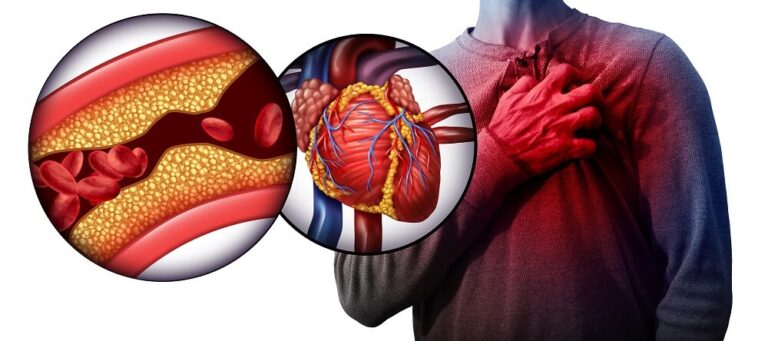
Coronary thrombosis means a blood clot has formed inside one of those arteries. Usually the clot forms on a fatty plaque in the artery wall that has cracked open. The clot plugs the artery, blood stops reaching that patch of heart muscle, and the muscle begins to die. That damage is a heart attack, which is called a myocardial infarction.
You will also see the term acute coronary syndrome (ACS) in the research below. It is the umbrella label for heart attacks and unstable angina, a state in which blood flow to the heart drops suddenly and chest pain comes on in new ways, sometimes at rest.
Read: 7 early signs of coronary thrombosis you should never ignore
What Does Heartburn Feel Like?
Heartburn happens when stomach acid splashes up into the esophagus, the tube that carries food from your mouth to your stomach. The lining of that tube is not built for acid, so it burns. Here is how it usually shows up.
- A burning feeling that starts behind the lower breastbone and creeps up toward your throat
- A sour, bitter taste in your mouth, along with belching and sometimes food coming back up
- It starts after a big, fatty, spicy meal, after alcohol and after coffee
- It gets worse when you lie flat and bend over, and eases when you sit upright
- It usually eases with an antacid
Those are patterns, not rules. A heart attack can copy several of them, as the research section below shows.
What Does Chest Pain From a Heart Clot Feel Like?
The American Heart Association describes heart attack discomfort as pressure, squeezing, fullness and pain, usually in the center of the chest. It typically lasts more than a few minutes, and it may fade and then return (AHA warning signs). Other features include the following.
- Spreading to one arm, both arms, the back, the neck, the jaw and the stomach
- Shortness of breath, with chest discomfort and sometimes without it
- A cold sweat, nausea and lightheadedness
- A sudden, intense start in some people, and a slow start with mild pain in many others
- No dependable relief from antacids
Some people with a clot describe a burning feeling instead of pressure, and many mistake it for indigestion. That overlap is why a description alone cannot settle the question.
Chest Pain vs Heartburn, Side by Side
Use this table as a guide to the usual patterns. Plenty of people with either problem will not fit it neatly.
| Feature | Heartburn | Pain from a heart clot |
|---|---|---|
| How it feels | Burning, with a rising sensation | Pressure, squeezing, fullness, tightness |
| Where it sits | Behind the lower breastbone, moving toward the throat | Center of the chest, spreading to the arms, back, neck, jaw and stomach |
| What sets it off | Big, fatty, spicy meals, alcohol, coffee, lying down, bending over | Physical effort and stress, though it can also start while you rest |
| Body position | Worse lying flat, better sitting upright | Usually unchanged by position. Pain that worsens with a deep breath points away from the heart |
| How long it lasts | Minutes to hours, usually after a meal | More than a few minutes, and it may ease off and come back |
| Antacids | Usually ease it | Unreliable either way |
| Pressing on the chest wall | Usually no change | If pressing on the spot brings the pain back, a heart cause is less likely |
| Other signs | Sour taste, food coming back up, belching, bloating | Shortness of breath, cold sweat, nausea, lightheadedness |
Warning Signs that Point to a Heart Clot
Any of these raises the chance that chest discomfort is coming from the heart.
- Pressure that lasts more than a few minutes, and may fade and then return (AHA)
- Pain that spreads to both arms. In a review of 58 studies, this was one of the stronger single clues (REBEL EM summary of Fanaroff et al.)
- Shortness of breath, a cold sweat, nausea and lightheadedness
- Pain that changed in the last 24 hours, coming more frequently, hitting harder and lasting longer (REBEL EM)
- Pain that feels like an earlier heart problem you have had
- In women, nausea and shortness of breath alongside chest discomfort (2021 AHA/ACC guideline coverage)
If you notice these, do not wait it out. Get checked right away.
What The Research Says About Chest Pain, Heartburn and Heart Clots
No study has put heartburn head to head with coronary thrombosis. What exists is a deep body of research on chest pain and acute coronary syndrome (ACS), the group of problems that follow when a clot cuts blood flow to the heart. Four findings matter most when you are trying to work out what a burning chest means.
Symptoms alone cannot confirm a heart attack (Fanaroff et al., JAMA 2015)
A systematic review of 58 studies pooled the results of emergency room patients with chest pain. Its conclusion was blunt. The history you tell the doctor, the physical exam and the ECG alone could not confirm ACS and could not rule it out. Risk scores that added the first troponin result, such as HEART and TIMI, gave doctors more to work with. A HEART score of 7 to 10 multiplied the odds of ACS by about 13, while a score of 0 to 3 cut the odds to one fifth (REBEL EM). About 10% of the patients with acute chest pain ended up with ACS.
Single clues moved the odds only a little. Pain spreading to both arms, pain that had changed in the last 24 hours and pain that felt like an earlier heart problem made ACS more likely. Pain you could bring back by pressing on the chest, and pain that got worse with breathing, made it less likely (REBEL EM, Hospital Procedures summary). Nitroglycerin, a medicine that opens blood vessels and is prescribed to some people with heart disease, did not help predict ACS either. Whether it eased the pain told doctors almost nothing.
Many heart attacks do not start with classic chest pain (Canto et al., JAMA 2012)
Researchers studied the hospital records of 1,143,513 people with a confirmed heart attack. Among women, 42.0% arrived without chest pain, compared with 30.7% of men. The study counted arm, neck and jaw pain as chest pain, and across everyone in the study 35.4% still had none (MDedge).
The danger was highest in younger women. Among patients under 45 who had no chest pain, 15.3% of women died in the hospital compared with 10.2% of men. The gap narrowed with age (TCTMD). People without chest pain were also more likely to have diabetes, more likely to reach the hospital late and less likely to get treatment that reopens the artery quickly (TCTMD).
Antacid relief does not settle it
The 1984 survey from the start of this article deserves a second look. Of 46 people with a confirmed heart attack, 21 (45%) first read the pain as indigestion, and 5 of the 17 who took antacids (29%) got relief (BestBETs). A 1978 study in the same review found that antacids relieved 95% of people with classic reflux pain, but only 18% of people whose unusual chest pain came from esophagus disease. Both studies are small and old, so treat them as hints, not proof.
A Canadian Tools for Practice review advises against using antacid response to tell stomach pain from heart pain. In one trial it covered, 14% of patients who came in with indigestion-like pain turned out to have a heart problem. Some emergency rooms give a “GI cocktail”, a liquid mix of antacid and numbing medicine, to test the idea. A systematic review of that practice found it is not proven to improve diagnostic accuracy for ACS.
The 2021 AHA/ACC chest pain guideline
In 2021 the American Heart Association and the American College of Cardiology released their first guideline devoted entirely to chest pain. It names high-sensitivity troponin, a blood test that picks up tiny amounts of a protein leaking from injured heart muscle, as the preferred standard for diagnosing a heart attack (Healio).
The announcement of the guideline puts numbers on the problem. Roughly 5% of adults who come to an emergency room with chest pain have ACS, and more than half end up with a cause outside the heart (CI Today). The Fanaroff review above put the ACS figure closer to 10%, so expect the number to shift from study to study.
The guideline defines acute chest pain as new pain, and old pain that has changed in pattern, strength and length (ACC summary). It also notes that women with ACS are more likely to have nausea and shortness of breath alongside chest discomfort, and it asks doctors to stop calling chest pain “atypical” because readers take that word to mean not from the heart (MDedge).
What this means for you. Symptom patterns shift the odds, but they cannot confirm coronary thrombosis and they cannot rule it out. That is the reason doctors lean on an ECG and a troponin test.
Quick self-checks and where they fall short
These checks can nudge your suspicion one way, and they can nudge it the other way. None of them rules out a heart attack.
- The effort check. Discomfort that starts when you walk fast and climb stairs, and fades when you rest, points toward the heart. The AHA/ACC guideline calls long-standing chest pain with steady triggers stable chest pain (ACC summary). Where it falls short, a clot can cause pain while you sit still.
- The position check. Burning that gets worse lying flat and eases sitting up favors reflux. Where it falls short, a heart attack can start after a meal and while you are lying down.
- The pressing check. Pain you can bring back by pressing on the chest wall makes ACS less likely (Hospital Procedures summary of Fanaroff et al.). Where it falls short, less likely does not mean ruled out.
- The antacid check. Relief proves little. In the 1984 survey, 5 of 17 heart attack patients who took antacids felt better (BestBETs).
- The nitroglycerin check. If a doctor has prescribed it, know that whether it helped did not predict ACS in the 58-study review (REBEL EM).
If you are unsure, treat the pain as a possible heart attack and get checked.
How Doctors Confirm Coronary Thrombosis
Doctors confirm coronary thrombosis with tests, not with symptoms. In an emergency room the usual steps are these.
- A 12-lead ECG. Stickers on your chest, arms and legs record the electrical activity of your heart. The AHA/ACC guideline calls the ECG important for assessing ACS in both new and long-standing chest pain (ACC summary). It can show a fully blocked artery (called a STEMI) on its own, and ST-segment depression, a dip in one part of the tracing, raised the odds of ACS in the Fanaroff review (REBEL EM).
- High-sensitivity troponin. This is the preferred standard for diagnosing a heart attack, and it is better at detecting heart muscle injury (Healio). Doctors repeat it to see whether the level is climbing, then read it together with the ECG (REBEL EM).
- A risk score. HEART and TIMI combine your history, the ECG and the first troponin, and they gave more information than history and exam alone (Fanaroff et al.).
- Imaging. Echocardiography, an ultrasound of the heart, shows areas of muscle that move poorly. Coronary angiography shows the blockage directly and lets doctors place a stent to hold the artery open.
Other Causes of Chest Pain Worth Knowing
More than half of the people who reach an emergency room with chest pain turn out to have a cause outside the heart (CI Today). The guideline sorts those causes into lung, muscle and bone, digestive, emotional and other groups. Examples include the following.
- Reflux and other problems of the esophagus
- A strained muscle in the chest wall, where pressing on the spot brings the pain back
- Lung problems such as pneumonia and a blood clot in the lung (pulmonary embolism), which is an emergency too
- Inflammation of the sac around the heart (pericarditis)
- A tear in the wall of the aorta, the body’s main artery, which causes sudden tearing pain that spreads to the back and needs emergency care
- Panic attacks and anxiety
You cannot sort these out at home. A doctor does it with an exam, an ECG and blood tests.
Who is at Higher Risk
Risk factors for coronary artery disease include high blood pressure, diabetes, smoking, high cholesterol, a family history of early heart disease and older age. In the Fanaroff review, a past abnormal stress test and peripheral arterial disease (narrowed arteries in the legs) made it more likely that chest pain was ACS (PubMed). In the Canto registry, heart attack patients without chest pain were more likely to have diabetes (TCTMD). If you fall into these groups, treat new chest discomfort seriously, even when it feels like indigestion.
Frequently Asked Questions
Can heartburn be a heart attack?
Heartburn itself is a stomach problem, but a heart attack can feel just like indigestion. In the 1984 survey of 46 confirmed heart attack patients, 21 (45%) first put the pain down to indigestion (BestBETs). Pain that is new, pain that is severe and pain that comes with other warning signs all deserve a check.
How long does heartburn last compared with a heart attack?
Heart attack discomfort typically lasts more than a few minutes, and it may fade and come back (AHA). Heartburn can last anywhere from minutes to hours and can also come and go with meals, so timing by itself does not separate the two.
Can antacids relieve heart attack pain?
Sometimes. In the 1984 survey, 5 of 17 heart attack patients who took antacids (29%) felt relief (BestBETs). A Canadian review advises against using antacid response to tell stomach pain from heart pain (Tools for Practice).
Can you have a heart attack with no chest pain?
Yes. In a registry of more than 1.1 million heart attack patients, 42.0% of women and 30.7% of men had no chest pain when they arrived (JAMA 2012). That count treated arm, neck and jaw pain as chest pain, so these patients had none of those either.
Is coronary thrombosis the same as a heart attack?
Not quite. Coronary thrombosis is the clot in a coronary artery. A heart attack, known as a myocardial infarction, is the damage to heart muscle that follows when the blockage stays in place. The clot is a common cause of that damage.
Which test tells heartburn apart from a heart attack?
An ECG and a high-sensitivity troponin blood test. The ECG checks the electrical pattern of your heart, and troponin shows whether heart muscle has been injured. Doctors repeat the troponin to watch the trend, and the 2021 guideline names it the preferred standard (Healio).
Bottom line
Burning that follows a meal and eases when you sit up points toward heartburn. Pressure that spreads, lasts more than a few minutes and comes with sweating, nausea and breathlessness points toward the heart. Large studies show that symptoms cannot reliably separate the two, and many heart attacks arrive with no chest pain at all. If you cannot be sure, get checked right away and let an ECG and a troponin test decide.
Sources
- Fanaroff AC et al. Does This Patient With Chest Pain Have Acute Coronary Syndrome? JAMA 2015
- REBEL EM summary of Fanaroff et al.
- Hospital Procedures summary of Fanaroff et al.
- Canto JG et al. Association of age and sex with myocardial infarction symptom presentation and in-hospital mortality. JAMA 2012
- MDedge, Painless MI in younger women more deadly
- TCTMD, Younger women with AMI less likely to present with chest pain than men
- TCTMD, in-hospital mortality table for patients without chest pain
- Gulati M et al. 2021 AHA/ACC Guideline for the Evaluation and Diagnosis of Chest Pain. Circulation
- ACC, 2021 Chest Pain Guideline, Ten Points to Remember
- Healio, ACC and AHA publish first guideline for evaluation and diagnosis of chest pain
- CI Today, AHA and ACC issue comprehensive clinical practice guideline on chest pain
- MDedge, AHA and ACC issue first comprehensive guidance on chest pain
- The Hospitalist, AHA and ACC issue first comprehensive guidance on chest pain
- BestBETs, Antacids and diagnosis in patients with atypical chest pain
- Tools for Practice, GI cocktail for dyspepsia
- Systematic review, GI cocktail for differentiating reflux disease from acute coronary syndrome in the emergency setting
- American Heart Association, heart attack and stroke warning signs